How to Choose a Google Pixel Case — The Complete Buyer's Guide (2026)
Most people choose a phone case the wrong way. They search "best Pixel 10 case," skim a roundup, and pick whichever product is listed first. Three months later they're frustrated the case is too bulky, the buttons feel mushy, the MagSafe doesn't work properly, or they're paying $70 for features they never use.
This guide fixes that. By the end, you'll know exactly which case type matches your lifestyle, which materials actually matter, what MagSafe and Pixelsnap compatibility really means, and what you should and shouldn't pay for. Whether you end up buying from us (The Pixel Case — a Pixel-exclusive store serving 50,000+ Pixel owners globally) or from another brand entirely, this guide will ensure you make the right choice.

A few things this guide covers that most don't: the difference between MagSafe, Qi2, and Pixelsnap (they're related but not identical — and getting it wrong means your accessories won't snap on properly); what "military-grade drop protection" actually means (less than you'd think); why a case made specifically for Pixel fits differently than one adapted from an iPhone mold; and the honest math on whether you even need a case at all (spoiler: you probably do, but we'll show you the numbers and let you decide).
The Pixel 10 series gets 7 years of software updates through 2032. A phone Google supports for that long is worth protecting properly — but "properly" doesn't necessarily mean "expensively." Let's find the right case for your specific situation.
Step 1: Identify Your Risk Profile — How Do You Actually Use Your Phone?
Before comparing brands, materials, or prices, figure out what you're protecting against. Not everyone needs the same case, and buying more protection than you need means carrying unnecessary bulk every single day.
Profile A — The Desk Worker / Light User
Your phone lives on a desk, nightstand, or in a bag. You pick it up, use it, set it down. Drops are rare and usually from sitting height (2–3 feet) onto carpet or a desk surface. Your risk level is low. You need slim protection that looks good, supports MagSafe charging, and doesn't add bulk to a device you handle gently. You do not need military-grade drop protection, belt clips, or thick armour. A $32–$35 slim case is perfect — anything more is overkill you'll resent carrying.
Profile B — The Commuter / Daily Carrier
Your phone is in your pocket, hand, or bag for 10+ hours a day. You use it on trains, in coffee shops, while walking. Drops happen — phone slips from your hand getting out of a car, tumbles off a café table, slides off your lap when you stand up. Your risk level is moderate. You need a balanced case: enough protection for hard-floor drops from waist height (3–4 feet), good grip texture, raised bezels that keep the screen from contacting surfaces when placed face-down. This is the sweet spot for TPU + polycarbonate hybrid cases — moderate protection without excessive bulk.
Profile C — The Active / Outdoor User
Gym, hiking, construction work, kids. Your phone takes real hits — dropped on concrete, knocked off counters by toddlers, bounced across gym floors. Your risk level is high. You need genuine rugged protection: dual-layer construction, deep corner air pockets, a textured grip surface that works with sweaty or gloved hands, and raised camera bezels that survive face-down concrete impacts. This is where heavy-duty shockproof and armour cases earn their price. Don't bring an ultra-slim case to a construction site.
Profile D — The Minimalist / Caseless Debater
You hate cases. You bought a beautiful phone and you don't want to hide it in plastic. You carry your Pixel bare whenever possible. Here's the honest math: a Pixel 10 screen repair costs $229–$289. The phone itself starts at $699. An ultra-slim case adds 1–2mm of thickness and 10–15 grams of weight. If those numbers make you reconsider, an aramid fiber case ($49.95) or slim matte case ($32.95) adds near-invisible protection. If you still prefer caseless — that's your call. Just know the repair cost going in.
Browse all Pixel 10 cases — 70+ styles from $32.95 →
Step 2: Understand the Case Types — What Each One Actually Does
Every Pixel case falls into one of eight categories. Understanding what each category does and doesn't do — is the fastest way to narrow your options from 70+ to 3–5 perfect matches.
Slim / Everyday Cases
The most popular category. Slim cases add 1–3mm of thickness using TPU, polycarbonate, or a thin hybrid. Drop protection is typically 6–10 feet — more than enough for pocket drops. Premium versions include MagSafe magnetic rings for Pixelsnap compatibility. These are the workhorse cases for Profiles A and B.
Right for: Desk workers, commuters, anyone who prioritises pocket comfort over maximum protection. Wrong for: Construction workers, heavy droppers, parents of toddlers. What to look for: Raised bezels on both screen and camera bar (even 0.5mm matters), MagSafe magnet alignment for Pixelsnap, and button channel quality — press the buttons through the case before committing. A mushy button press on day one doesn't improve with time.

Example: Slim Matte MagSafe Case — $32.95
Matte polycarbonate, MagSafe ring, fingerprint-resistant, 1.2mm profile. The archetype slim everyday case.
Rugged / Drop Protection Cases
Dual-layer TPU + polycarbonate with reinforced corners, deep air cushion pockets, and raised bezels that sit 2–3mm above the screen and camera. Drop ratings range from 12–20 feet. Some include sliding camera covers and integrated kickstands. These are the cases for Profile C — anyone whose phone faces genuine, recurring physical risk.
Right for: Active lifestyles, outdoor work, parents, clumsy users. Wrong for: Minimalists and desk-bound users (too bulky). What to look for: Corner air cushion design (this is where most impact energy concentrates), camera bar coverage depth, grip texture on the sides (smooth rugged cases are a contradiction), and whether the kickstand (if included) actually holds the phone's weight without collapsing.

Example: Heavy-Duty Shockproof Case — $34.95
Dual-layer TPU + PC, corner air pockets, 15ft drop tested, raised camera bezels. The best rugged option under $35.
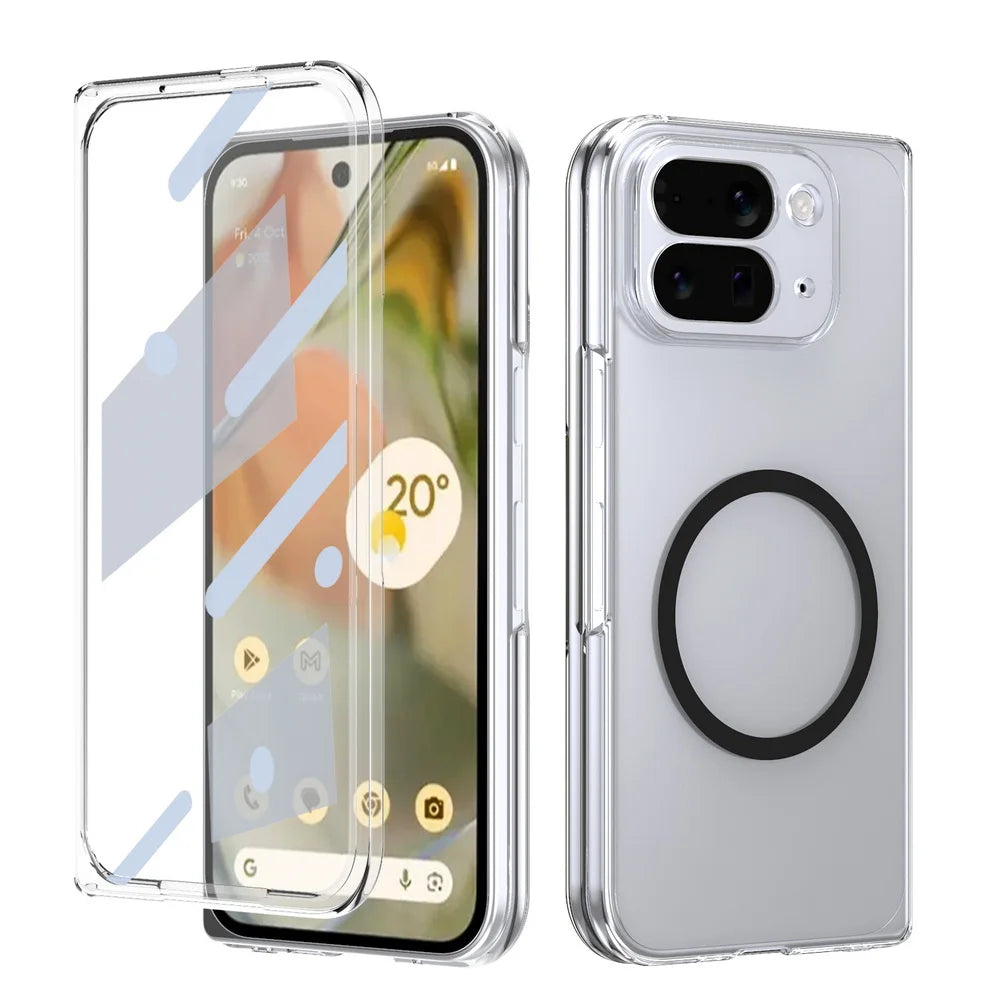
Clear / Transparent Cases
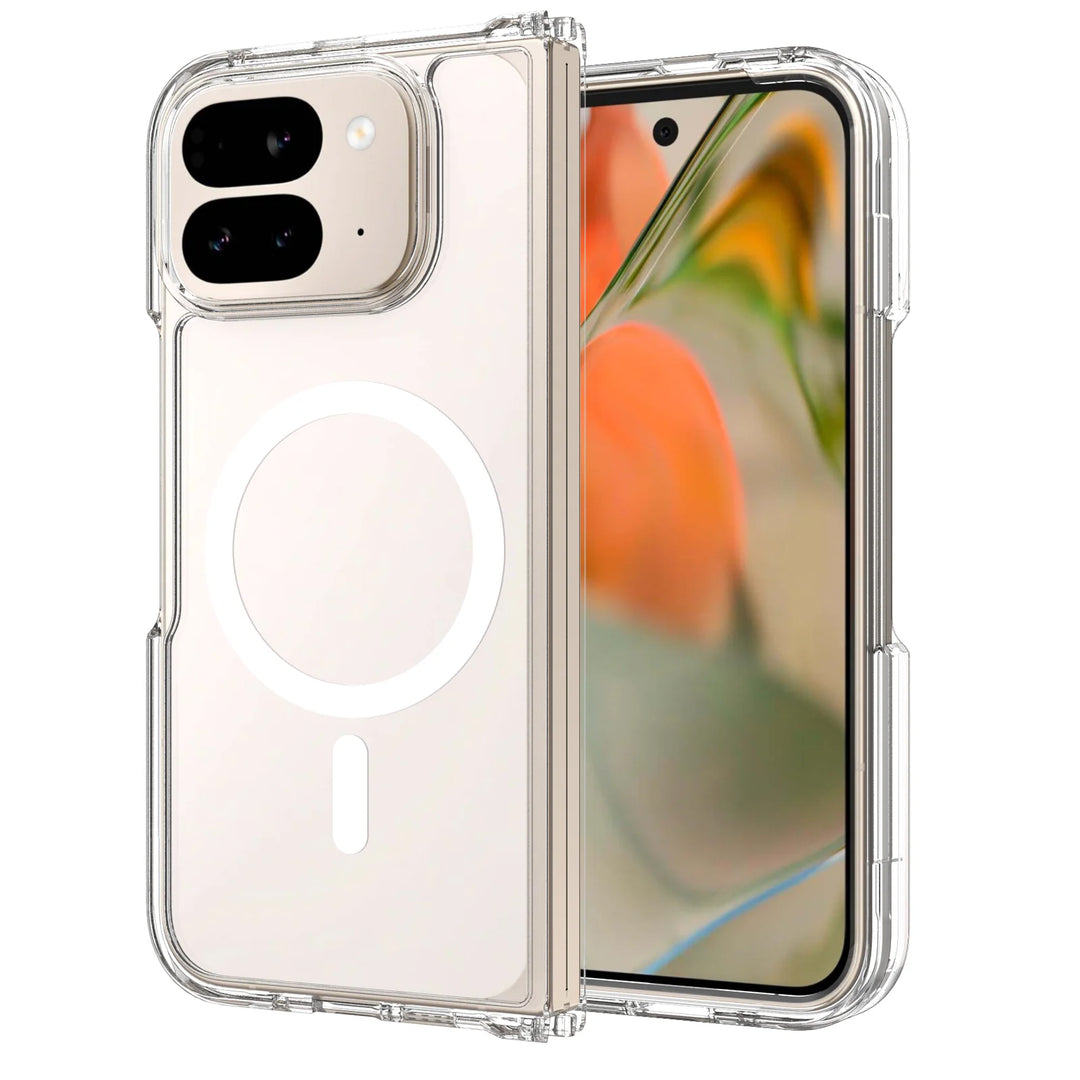
Designed to show off your Pixel's colour — Obsidian, Porcelain, Wintergreen, Peony, Jade, or any other finish you specifically chose. Two variants exist: soft TPU clear (flexible, tends to yellow over 6–12 months) and hard polycarbonate clear (rigid, stays clear significantly longer). Premium versions add anti-yellowing UV coating and MagSafe magnetic rings visible through the transparent body.
Right for: Profiles A and B who chose their Pixel colour intentionally and don't want to hide it. Wrong for: Anyone who'll blame the case when it yellows in 8 months (consider hard PC variants instead). What to look for: Anti-yellowing UV coating (critical for longevity), whether the bumper edges are transparent or coloured, and MagSafe magnet visibility (visible rings through a clear case can look either intentional-cool or cheap — check photos carefully).

Example: Clear Hybrid Case with Shockproof Bumper — $32.95
PC back + TPU bumper, anti-yellowing coating, raised bezels. Clear protection that stays clear.
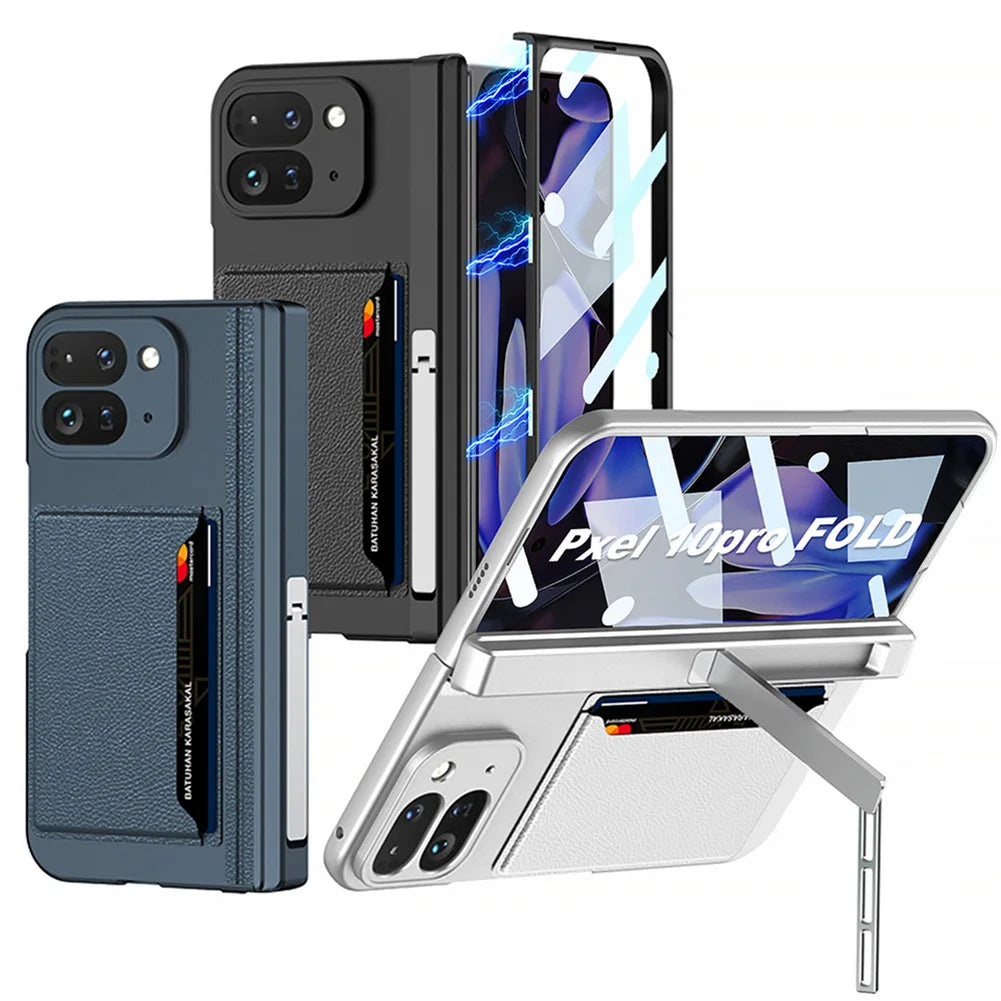
Wallet / Card Holder Cases
Integrate 2–4 card slots into the case body, replacing your separate wallet. Three sub-types exist: full folio (flip cover wrapping the entire phone), detachable magnetic wallet (snaps on/off via magnets), and built-in card slot (permanent slot on the back). The folio provides the most card storage and full-screen protection when closed but blocks wireless charging in the closed position. Detachable wallets offer flexibility but rely on magnetic grip strength. Built-in slots are the slimmest but hold fewer cards.
Right for: Minimalist travellers, daily commuters, anyone who hates carrying a wallet separately. Wrong for: Wireless charging heavy users (folio covers must be opened). What to look for: Card capacity, RFID blocking (important for contactless cards), whether the folio cover opens cleanly for camera use without flopping around, and MagSafe attachment strength on detachable versions.

Example: MagSafe Leather Wallet Flip Case — $39.95
Full-folio leather, 3 card slots, cash pocket, MagSafe ring. Replaces your phone case AND wallet.
Leather Cases
Genuine or vegan leather wrapped over a TPU or polycarbonate shell. The appeal is tactile: leather feels warm, premium, and professional in a way no plastic case replicates. Genuine leather develops a patina over months of use — scratches and wear create a unique character. Vegan leather (PU) maintains a uniform appearance and is more water-resistant but doesn't develop that lived-in quality.
Right for: Business users, Profiles A and B who prioritise aesthetics and in-hand feel. Wrong for: Budget-focused buyers (leather adds a price premium), Profile C (leather scuffs quickly in rough environments). What to look for: Genuine vs vegan leather (genuine patinas beautifully, vegan stays clean), lining quality (microfiber protects the Pixel's glass back from micro-scratches during flex), stitching durability on edges, and whether MagSafe magnets are embedded. Honest note: leather cases add 3–5mm more thickness than slim cases and offer moderate — not maximum — drop protection.

Example: Magnetic Leather Case — $39.95
Vegan leather with MagSafe ring, microfiber lining, clean professional aesthetic.
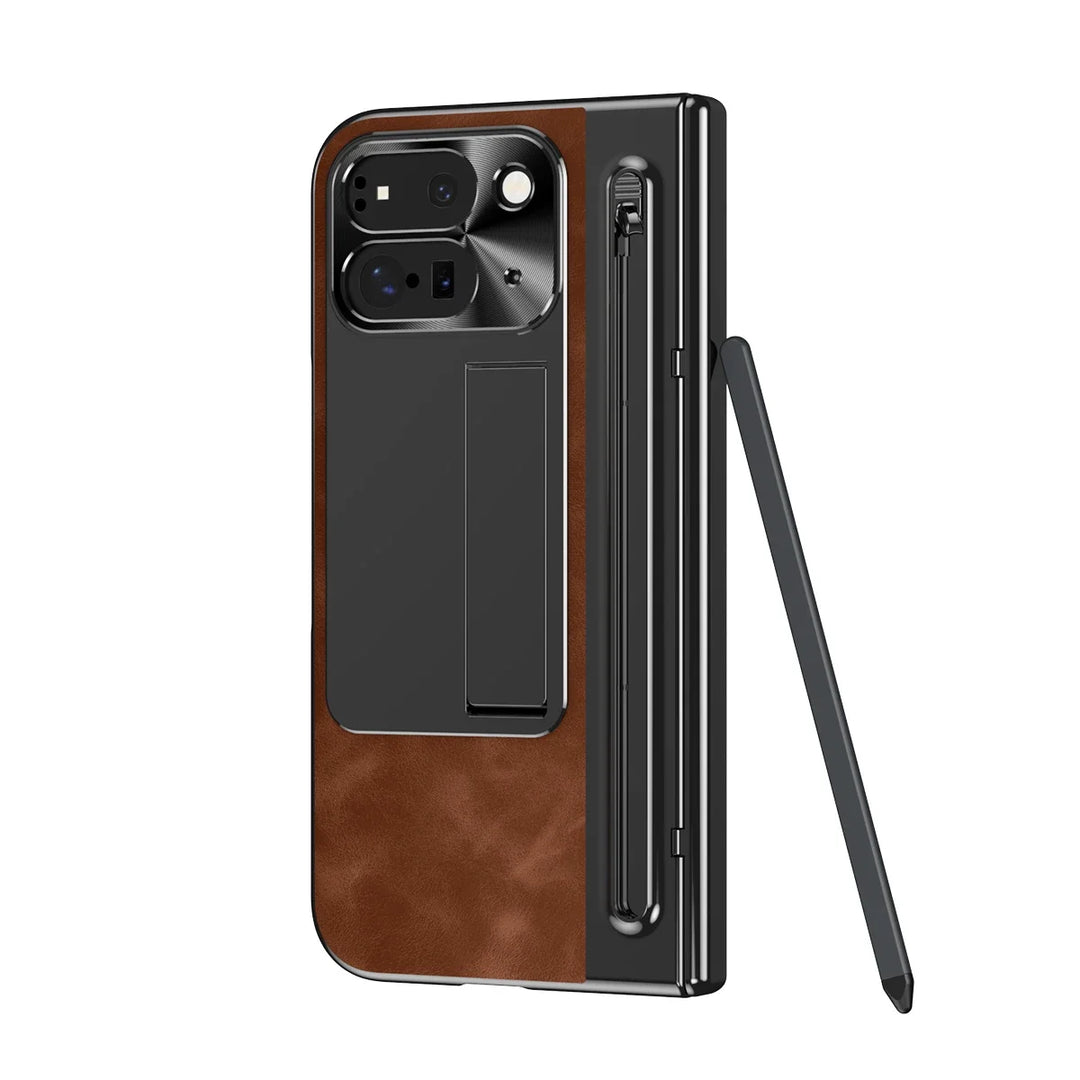
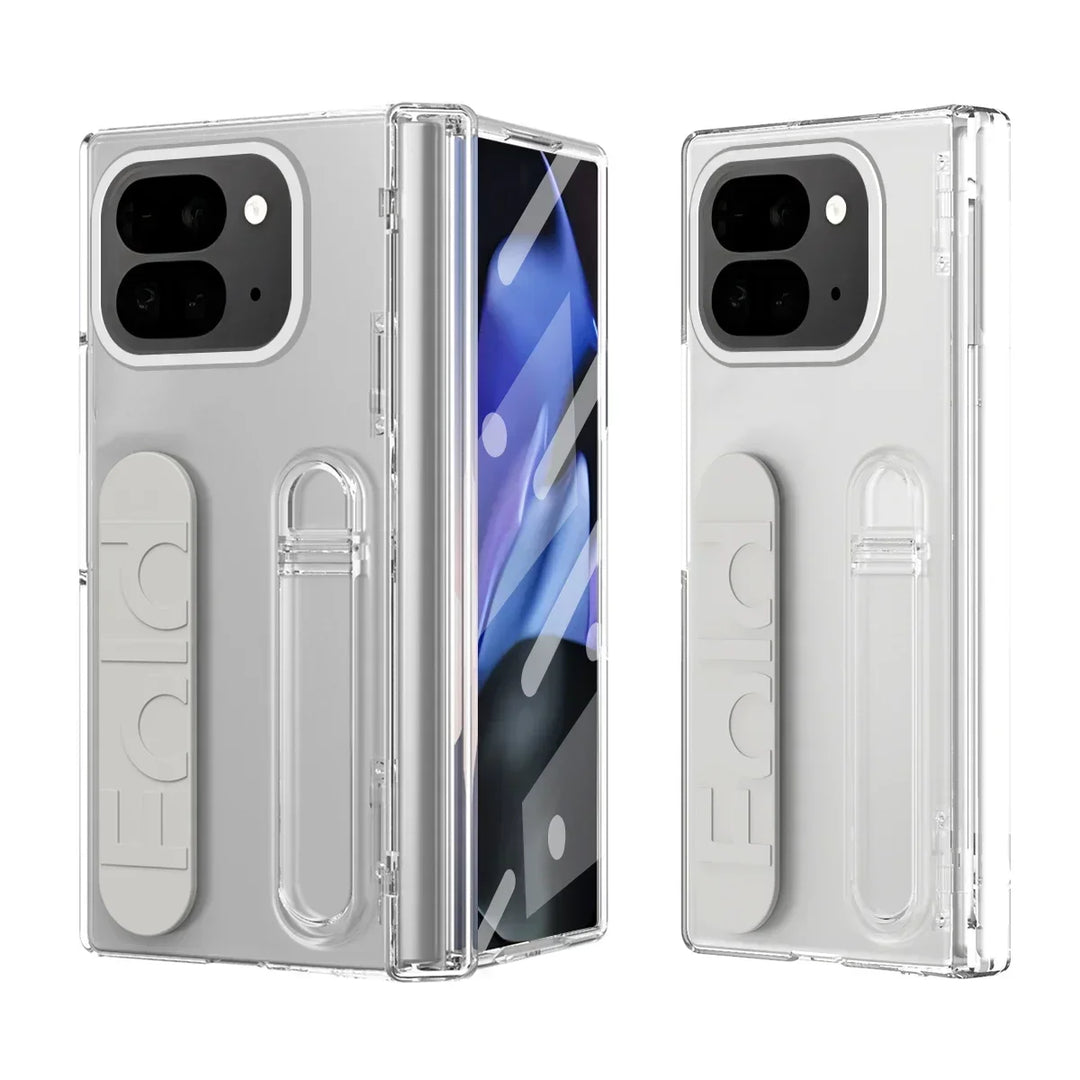
Kickstand Cases
Built-in stands for hands-free media consumption, video calls, and desk use. Available across slim, rugged, and clear categories. The stand mechanism matters more than the case material: fold-out metal stands are the sturdiest but add thickness. Magnetic rotating stands are slimmer but may wobble at extreme angles. Ring-stand hybrids double as finger grips but have limited angle range.
Right for: Heavy video watchers, desk workers, frequent video callers. What to look for: Whether the stand supports both landscape AND portrait orientation, stability on angled surfaces (not just flat desks), whether MagSafe charging works with the stand folded flat, and whether the stand mechanism adds noticeable pocket bulge.

Example: Anti-Drop Case with Kickstand — $34.95
Shockproof body, integrated metal kickstand, landscape + portrait, MagSafe compatible.
Ring / Grip Cases
A 360° rotating ring on the back that functions as finger grip (reduces drops), limited-angle stand, and car mount attachment point. Especially valuable for large-phone users — the Pixel 10 Pro XL at 6.8 inches is genuinely difficult to use one-handed without a grip aid. Ring cases solve this directly.
Right for: Large-phone users (Pro XL), one-handed operators, people who drop phones due to poor grip. What to look for: Whether the ring folds completely flat for pocket carry (some sit 2–3mm proud), rotation smoothness, and whether ring placement interferes with MagSafe alignment — on some designs, the ring sits over the magnet ring, reducing charging efficiency. Check compatibility before buying.

Example: Magnetic Ring Case with 360° Grip — $34.95
360° ring, MagSafe compatible, doubles as stand and car mount attachment.
Aramid Fiber / Ultra-Premium Cases
Aerospace-grade aramid fiber (the same material used in body armour and Formula 1 cars) woven into cases that are 0.6–1mm thin and nearly weightless. The closest thing to a "caseless" feel with actual protection. These cases protect against scratches and light bumps but offer minimal drop cushioning — they're thin by design, trading impact absorption for near-invisible profile. Brands like PITAKA ($60–$70) popularised this category; The Pixel Case offers the same 600D aramid fiber at $49.95.
Right for: Profile D minimalists who want something — anything — without adding bulk. Wrong for: Profile C (too thin for serious drops), budget buyers ($49+ is the floor for authentic aramid). What to look for: Authentic aramid fiber vs imitation carbon fiber pattern (real aramid is woven, not printed), MagSafe magnet integration, and button cutout precision (thin cases leave little room for error in button alignment).

Example: Ultra-Slim Aramid Fiber Case — $49.95
600D aramid fiber, under 1mm thin, MagSafe compatible. The caseless-feel case.
Step 3: Materials — What Your Case Is Actually Made Of
Case listings throw around material names without explaining what they mean. Here's every material used in modern Pixel cases, how each performs, and how each ages over time.
TPU (Thermoplastic Polyurethane): The workhorse of the case industry. Flexible, slightly rubbery, excellent shock absorption. TPU is what makes bumper edges compress on impact and spring back. It provides natural grip without added texturing. The downside: clear TPU yellows over 6–12 months from UV exposure and skin oils. Coloured or opaque TPU doesn't have this problem. Best as a bumper/edge material paired with a rigid back plate.
Polycarbonate (PC): Hard, rigid, scratch-resistant. The same material used in bulletproof glass (at much greater thickness). Polycarbonate provides structural rigidity — it distributes impact force across a wider area instead of letting it concentrate at one point. Less grip than TPU alone. Doesn't yellow. Best as a back plate material paired with TPU edges.
TPU + PC Hybrid: The most common and arguably best all-around construction for everyday cases. Soft TPU inner layer absorbs impact energy, hard PC outer shell distributes force and resists scratches. This is the construction behind most mid-range and premium cases, including those from Spigen, OtterBox, and The Pixel Case. If you see "hybrid" or "dual-layer" in a listing, this is what it means.
Genuine Leather: Natural material that breathes, develops character, and feels warm in hand. Scratches and wear create a unique patina over months of use — some owners prize this, others find it messy. Genuine leather requires more care: it's vulnerable to water spots, can dry out without conditioning, and stains more easily than synthetic materials. The premium feel is real, and for many buyers, worth the maintenance trade-off.
Vegan Leather (PU Leather): A polyurethane-based material designed to look and feel like leather without the natural material's variability. More water-resistant, easier to clean, lower cost, and more consistent in appearance. Doesn't develop patina (stays the same appearance throughout its life). A good choice for buyers who want leather aesthetics without leather maintenance.
Aramid Fiber: Aerospace-grade woven material, five times stronger than steel by weight. Used in body armour, racing cars, and ultra-premium phone cases. Doesn't conduct radio frequency signals, which means it won't interfere with your Pixel's antenna performance. Extremely thin and light. The premium of premium materials — and priced accordingly ($49–$70).
Tempered Glass: Some cases use a tempered glass back panel instead of polycarbonate. More scratch-resistant than any plastic but heavier and more fragile on direct impact. Creates a premium visual effect that closely matches the Pixel's own glass back. A niche choice for users who prioritise scratch resistance and aesthetics over weight.
Silicone: Soft, very grippy, good basic impact absorption. Used in entry-level protective cases and Google's own official cases. Attracts lint from pockets. Provides a comfortable hold but doesn't offer the structural rigidity of polycarbonate. Best for basic everyday protection where grip and comfort matter more than maximum impact resistance.
| Material | Grip | Protection | Bulk Added | Yellowing Risk | Best For |
|---|---|---|---|---|---|
| TPU | ⭐⭐⭐⭐ | ⭐⭐⭐ | Low | Yes (clear) | Everyday carry |
| Polycarbonate | ⭐⭐ | ⭐⭐⭐ | Low | No | Slim protection |
| TPU + PC Hybrid | ⭐⭐⭐ | ⭐⭐⭐⭐ | Medium | No | Best all-around |
| Genuine Leather | ⭐⭐⭐ | ⭐⭐ | Medium | No | Premium / professional |
| Vegan Leather | ⭐⭐⭐ | ⭐⭐ | Medium | No | Premium aesthetics |
| Aramid Fiber | ⭐⭐ | ⭐⭐ | Minimal | No | Ultra-minimalist |
| Silicone | ⭐⭐⭐⭐⭐ | ⭐⭐ | Low | No | Basic protection |
Step 4: Pixel-Specific Fit Issues — What Generic Brands Get Wrong
The Google Pixel has three design elements that make case engineering more challenging than iPhone or Samsung: the camera bar, Pixelsnap magnet placement, and button profiles. Brands that make cases for 50+ phone models often get these wrong in subtle ways that affect daily use.
The camera bar problem. The Pixel camera bar is a horizontal raised module running across the back — one of the most distinctive design elements in Android phones. Its shape has changed with every generation: the Pixel 6/7's horizontal visor, the 8's oval, the 9's island, and the 10's refined module. Generic case brands often cut a rectangular opening that approximately fits the camera module, leaving gaps at the edges where dust collects and grinds against lens glass. Pixel-specific cases engineer the cutout to the exact contour of each model's camera module — millimetre-precise rather than "close enough."
Pixelsnap magnet alignment. The Pixel 9 and 10 series use Pixelsnap — Google's implementation of Qi2 magnetic wireless charging. The magnet ring must be precisely centred over the charging coil for optimal energy transfer. Cases designed for iPhone first and adapted for Pixel second often have the magnetic ring offset by 1–3mm — enough to reduce charging efficiency and cause MagSafe accessories to sit slightly off-centre. It works, but imprecisely.
Button channel quality. Pixel buttons have a specific profile and resistance. Cases that cover the buttons (rather than leaving cutouts) add a layer of material between your finger and the actual button. Well-engineered button channels use stiffer material at the contact point to preserve the original click feel. Poorly engineered channels add soft TPU that makes buttons feel mushy and vague. This is one of the areas where dbrand's Grip Case genuinely excels — and where many budget cases fall short.
What to check when buying any Pixel case: Does the listing specify your exact Pixel model (not just "Google Pixel compatible")? Does it show the camera bar cutout in product photos? Does it mention Pixelsnap, Qi2, or MagSafe specifically? Does the brand have reviews from Pixel users — not repurposed reviews from Samsung or iPhone buyers?
Speaker grille alignment. A less discussed but genuinely impactful fit issue. The Pixel's bottom-firing speaker sits next to the USB-C port. Cases with imprecise cutouts can partially block the speaker opening, reducing volume and distorting audio. Pixel-specific cases engineer the bottom cutout to the exact spacing between speaker, USB-C, and microphone. Generic cases often use one large rectangular cutout that works but looks less refined.
These details sound minor individually. Collectively, they're the difference between a case that feels like it was made for your phone and one that feels adapted from someone else's. A Pixel-exclusive brand designs every case starting from Pixel dimensions. A multi-brand manufacturer adapts existing molds. Both approaches produce functional cases, but the Pixel-first approach produces cases that feel precisely engineered rather than approximately correct.
Step 5: MagSafe, Qi2, and Pixelsnap — What Works on Pixel
This is the most confusing area of Pixel case shopping. Three terms — MagSafe, Qi2, and Pixelsnap — all describe related but different magnetic charging systems. Here's what each means and how they interact with your Pixel case.
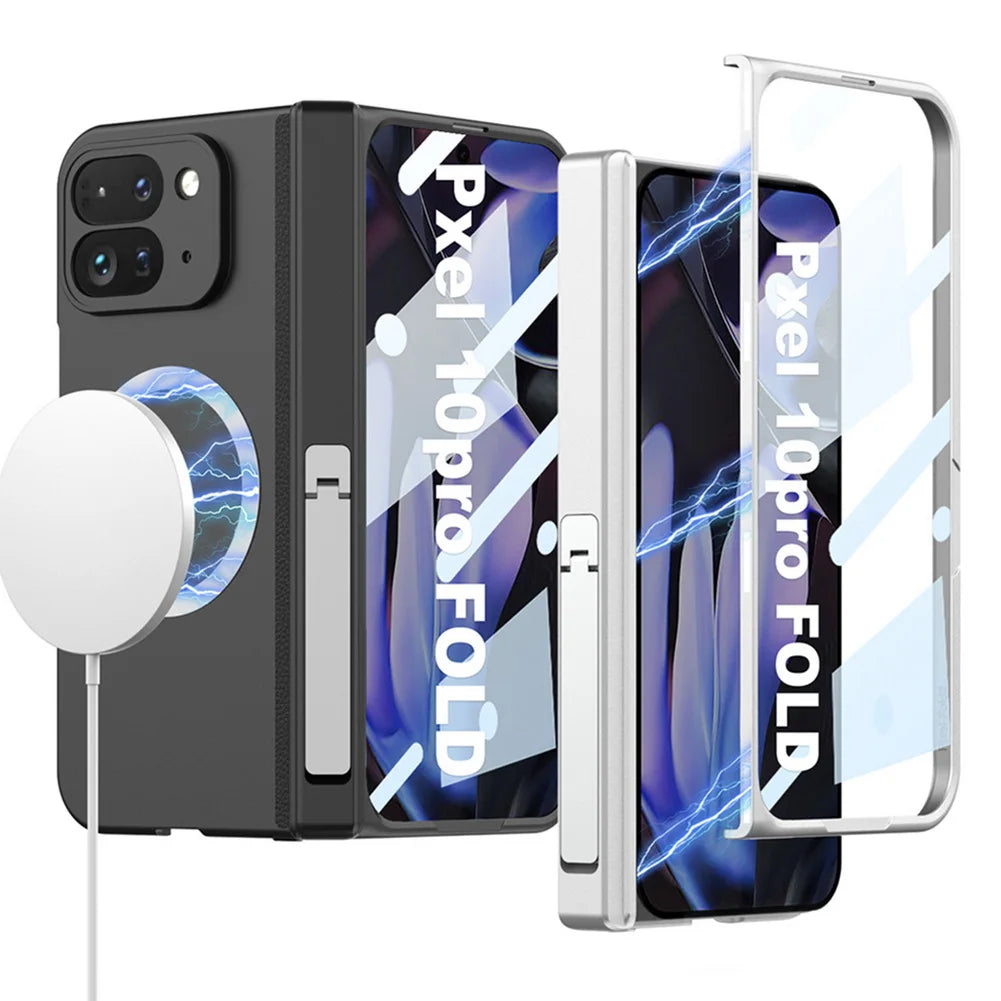
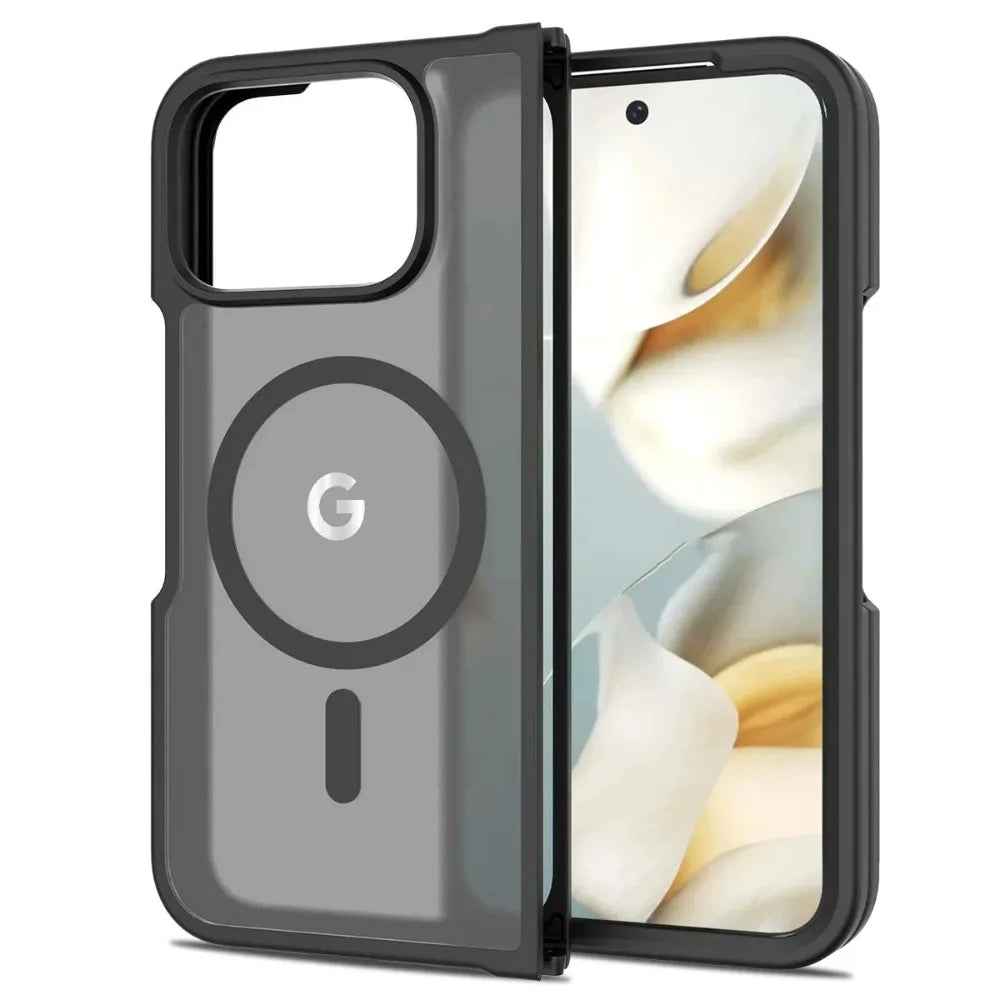
MagSafe is Apple's magnetic ecosystem, originally designed for iPhone. It uses a ring of magnets around a Qi wireless charging coil to enable snap-on alignment. iPhones have MagSafe built in. Pixels don't — but cases with MagSafe-compatible magnet arrays allow Pixels to use the same accessories: MagSafe chargers, wallets, car mounts, and stands.
Qi2 is the open standard version of MagSafe — same magnet ring specification, but manufacturer-agnostic. Google adopted Qi2 starting with the Pixel 8 series, meaning Pixel 8, 9, and 10 phones support Qi2 magnetic wireless charging natively (with a compatible case).
Pixelsnap is Google's branded implementation of Qi2, used on the Pixel 9 and 10 series. It enables 15W magnetic wireless charging with Pixelsnap-certified chargers and accessories. Functionally, Pixelsnap IS Qi2 with Google branding.
The practical summary: A case labelled "MagSafe compatible" will work with all three systems if the magnet array is properly placed. A case without magnets supports standard Qi wireless charging (typically 7.5–12W) but won't snap onto MagSafe accessories or Pixelsnap chargers. Metal or aluminium cases may block wireless charging entirely.
| Case Type | Pixelsnap (15W) | MagSafe Accessories | Qi Wireless |
|---|---|---|---|
| MagSafe-compatible case | ✅ 15W snap-on | ✅ Yes | ✅ Yes |
| Non-magnetic case | ⚠️ No snap | ❌ No | ✅ Yes |
| Metal / aluminium case | ❌ Blocks | ❌ Blocks | ❌ Blocks |
| Wallet folio (closed) | ❌ Closed | ❌ Closed | ❌ Must open |
Do you need MagSafe on your Pixel case? If you use or plan to use any of these: magnetic wireless chargers, snap-on wallets, car dashboard mounts, or MagSafe-compatible stands, then yes, a MagSafe-compatible case is essential. Without the magnetic ring in your case, these accessories either do not attach at all or attach weakly and slide during use. If you only use wired charging and do not plan on magnetic accessories, a non-magnetic case works fine and is typically a few dollars cheaper.
A note on older Pixel models and MagSafe. The Pixel 8 series was the first to support Qi2 natively. Pixel 7 and older do not have native Qi2 support, but MagSafe-compatible cases still add magnetic functionality for accessories like wallets and mounts (just not the fastest wireless charging speeds). If you have a Pixel 7 or older and want magnetic accessories, a MagSafe case still adds value, but wireless charging will be limited to standard Qi speeds (7.5W) regardless of case type.
Step 6: Drop Protection Ratings — What They Mean and What You Need
Case listings throw around "military-grade," "MIL-STD-810H," and foot ratings without context. Here's what these actually mean.
MIL-STD-810H is a US military testing standard originally developed for equipment durability. For phone cases, it typically means drop testing from 4–6 feet onto a hard surface, surviving 26 drops from various angles. The "military-grade" label sounds impressive but is freely applied — any manufacturer can claim it. There's no independent verification body that certifies phone cases, unlike (for example) IP water-resistance ratings for the phones themselves.
Foot ratings (10ft, 15ft, 20ft) refer to the height from which the case was drop-tested. Higher numbers mean more cushioning and a wider safety margin. Most real-world phone drops are 2–4 feet — pocket height, desk height, waist height during walking. A 10ft rating provides a 2.5–5x safety margin over these everyday scenarios.
What you actually need by risk profile: Profile A (desk worker): 6ft is plenty. Profile B (commuter): 10ft provides comfortable margin. Profile C (active/outdoor): 15ft handles aggressive real-world scenarios. Construction/extreme: 20ft+ (OtterBox Defender territory — and genuinely warranted for these environments).
What ratings don't cover: Edge-first drops onto the screen (especially dangerous), drops onto sharp objects like keys or gravel, drops with the case partially seated (case popped loose from one corner), and cumulative damage from repeated drops that stress the same corner over months. No case protects against every possible scenario — they reduce risk, not eliminate it.
The real-world perspective. In our experience serving tens of thousands of Pixel owners, the vast majority of phone damage comes from three scenarios: phone sliding off a smooth surface (table, car dashboard, armrest), phone dropping from hand while walking, and phone falling from pocket when sitting down or getting out of a car. All three are 2-4 foot drops onto hard surfaces. A case rated for 10 feet handles all of these with a comfortable margin. A case rated for 20 feet handles them with an even larger margin you will statistically never need. The question is not whether more protection is better (it is, technically), but whether the extra bulk and cost are worth it for a margin you will almost certainly never use.
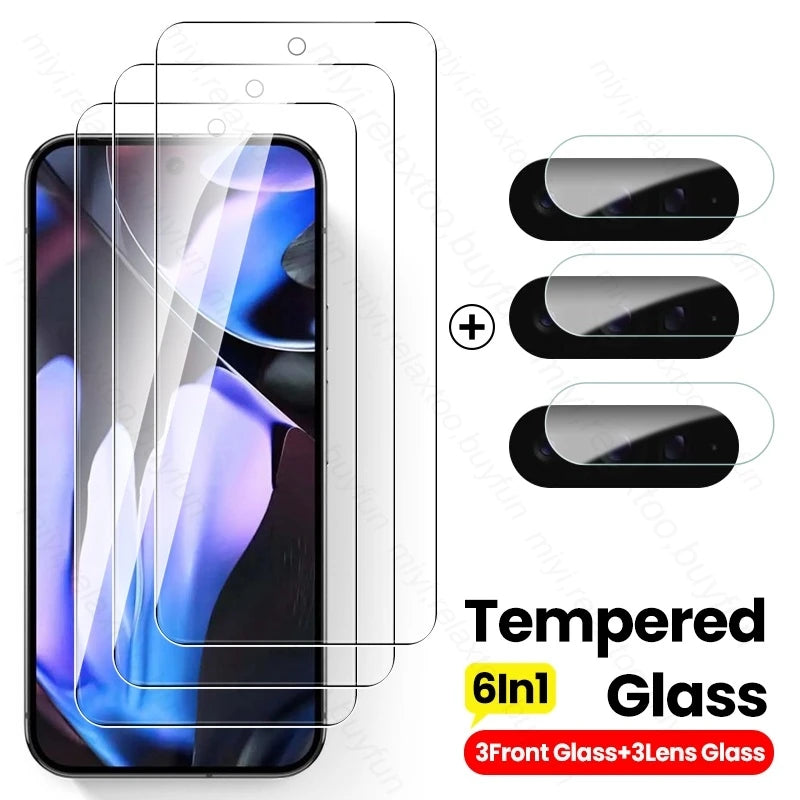
Screen protectors vs cases. A related question: do you need a screen protector in addition to a case? Short answer: a case with raised screen bezels prevents the screen from contacting flat surfaces when dropped face-down, but does not protect against point impacts (a key pressing against the screen, or gravel). A tempered glass screen protector addresses point impacts. For maximum protection, use both. For everyday use, a case with raised bezels is usually sufficient on its own, since the Pixel 10 uses Corning Gorilla Glass Victus 2 which is significantly more scratch-resistant than previous generations.
The 5 Most Common Pixel Case Buying Mistakes
After serving 50,000+ Pixel owners, we see the same five mistakes repeatedly. Avoiding these saves you money and frustration.
Mistake 1: Buying a case rated for a different Pixel model. A Pixel 10 case does not fit a Pixel 10 Pro. A Pixel 9 Pro case does not fit a Pixel 10 Pro. Every Pixel generation has different dimensions, camera bar shapes, and button placements. Always verify your exact model before purchasing. This sounds obvious, but it is the single most common return reason across all Pixel case brands.
Mistake 2: Assuming all MagSafe cases are equal. The magnetic ring placement, field strength, and alignment precision vary significantly between brands and price points. A poorly aligned magnet ring means your Pixelsnap charger sits off-centre, your MagSafe wallet drifts, and your car mount loses grip during turns. Look for cases that specifically mention Qi2 or Pixelsnap certification, not just generic MagSafe compatibility.
Mistake 3: Buying more protection than you need. A rugged case with 20ft drop protection sounds impressive, but if you work at a desk, you are carrying unnecessary weight and bulk every day for protection you will never use. Match your case to your actual risk profile (Step 1 above), not to your fear of worst-case scenarios.
Mistake 4: Ignoring the clear case yellowing timeline. All-TPU clear cases yellow within 6-12 months regardless of brand. If you want long-term clarity, choose a polycarbonate-back clear case with UV anti-yellowing coating, or accept that your clear case is a semi-disposable item you will replace annually.
Mistake 5: Paying brand tax without knowing it. Spigen, dbrand, OtterBox, and Mous make excellent products, but their pricing includes retail distribution costs, multi-platform engineering overhead, and brand premium. A Pixel-exclusive direct-to-consumer brand like The Pixel Case offers comparable materials and protection at 20-45% lower prices because those overhead costs do not exist. Understanding what you are paying for versus what protects your phone helps you make a value-conscious decision rather than a brand-driven one.
The Decision Matrix — Which Pixel Case Is Right for You?
| Your Priority | Case Type | Material | Price Range |
|---|---|---|---|
| Slim everyday carry | Slim MagSafe | TPU + PC | $32–$35 |
| Maximum drop protection | Rugged / Heavy-Duty | TPU + PC dual-layer | $34–$35 |
| Show off Pixel's colour | Clear | PC + TPU bumper | $32–$35 |
| Replace your wallet | Wallet / Folio | Leather + TPU | $34–$40 |
| Hands-free media watching | Kickstand | TPU + PC | $34–$35 |
| Premium professional look | Leather | Genuine/Vegan leather | $34–$40 |
| One-handed grip on large Pixel | Ring / 360° Grip | TPU + ring hardware | $32–$35 |
| Ultra-minimalist, thinnest possible | Aramid Fiber | 600D Aramid | $49–$50 |
| No case, maximum risk | — | — | $229–$289 (screen repair) |
Which Pixel Model Do You Have? — Case Compatibility by Generation
Pixel cases are model-specific — a Pixel 9 case does not fit a Pixel 10, and a Pixel 10 case does not fit a Pixel 10 Pro XL. Always buy for your exact model. Here's what's available across all generations. At The Pixel Case, all orders ship free worldwide with insured tracking — regardless of model or location.
| Pixel Model | Released | Cases Available | Updates Until |
|---|---|---|---|
| Pixel 10 / Pro / Pro XL | 2025 | 70+ cases | 2032 |
| Pixel 10 Pro Fold | 2025 | Available | 2032 |
| Pixel 9 / Pro / Pro XL | 2024 | Available | 2031 |
| Pixel 8 / 8 Pro | 2023 | Available | 2030 |
A phone Google supports until 2030–2032 is worth protecting properly. Most case brands stop manufacturing for a Pixel model within 12–18 months of launch. The Pixel Case maintains inventory across Pixel 6 through Pixel 10 Pro Fold — if you own an older device, we still make your case.
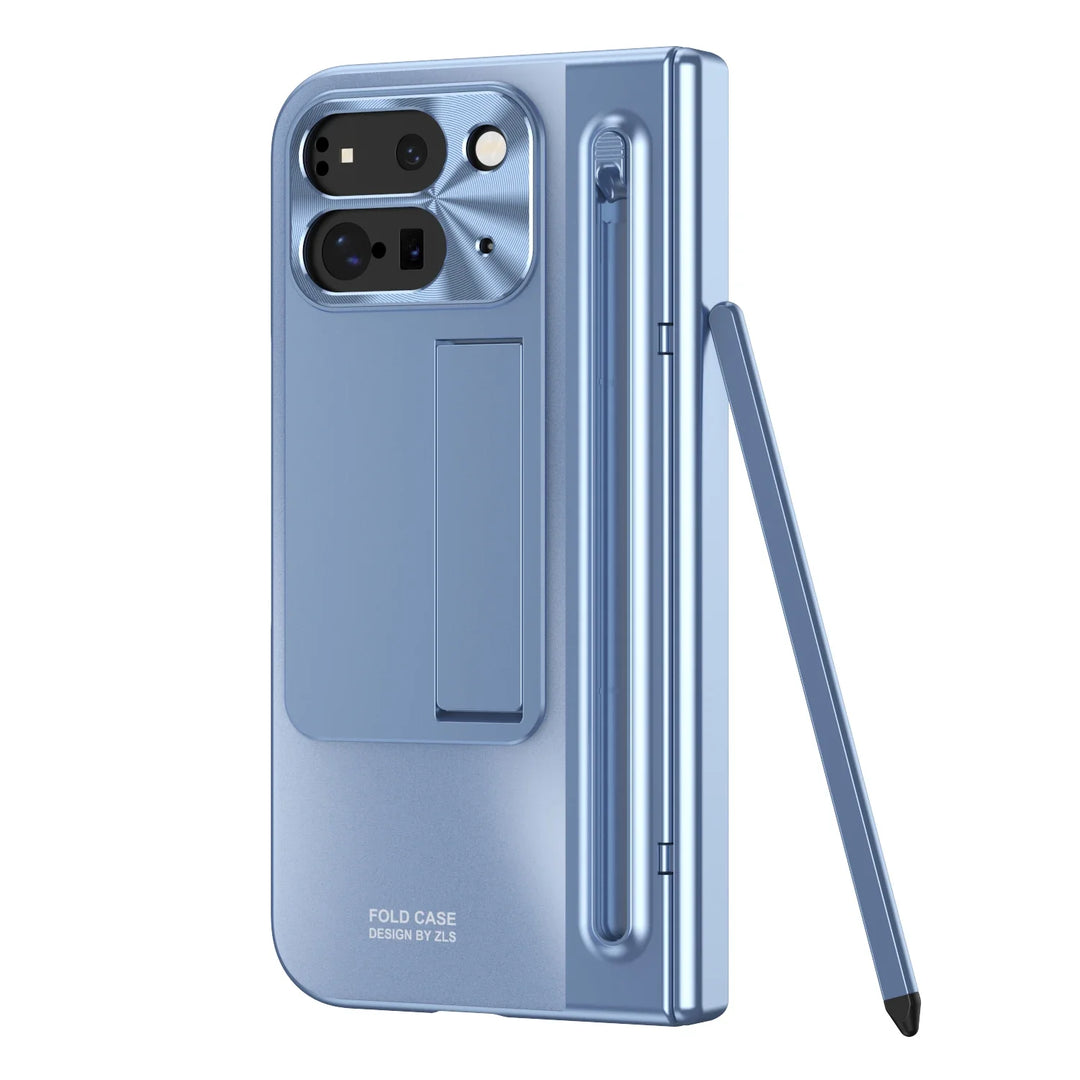
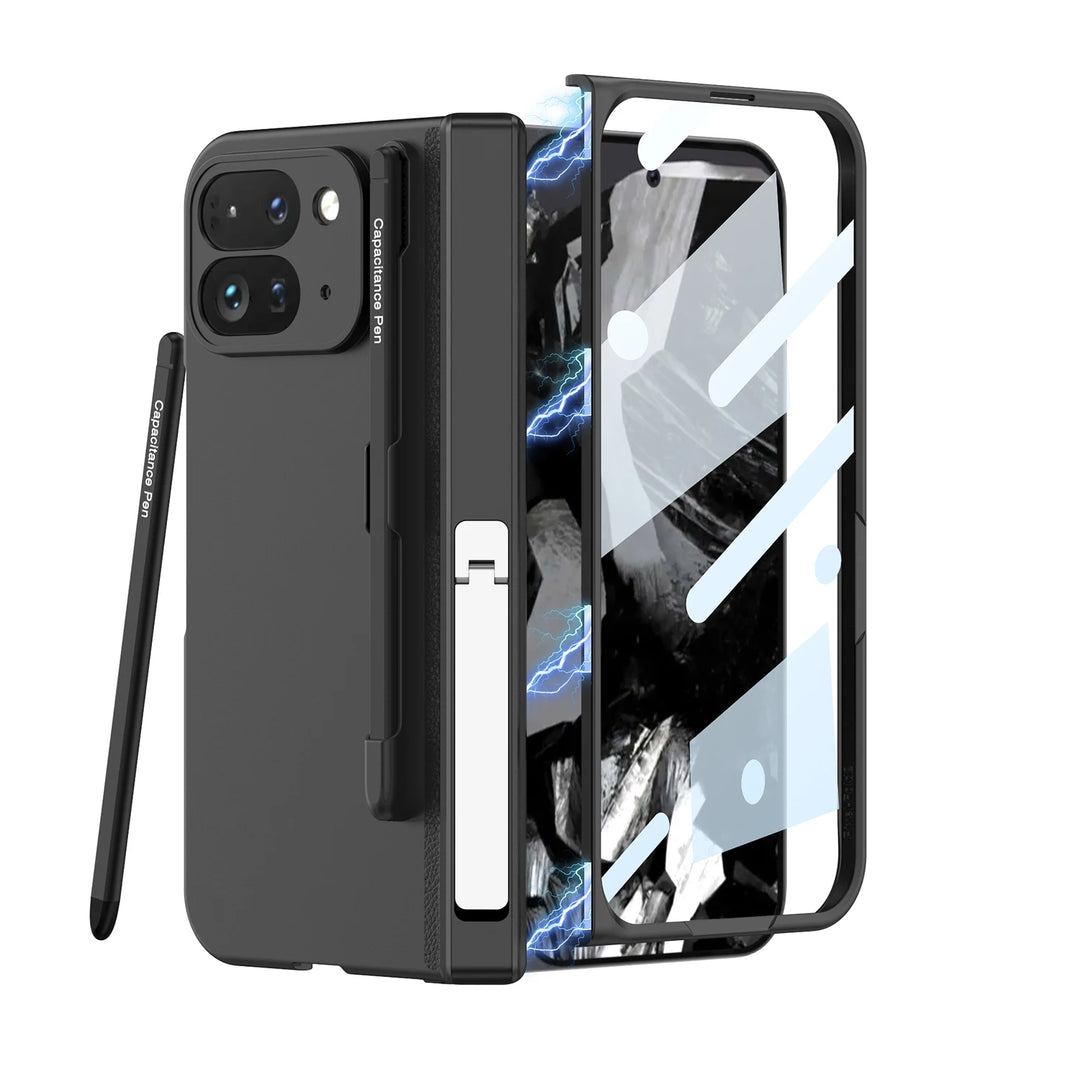
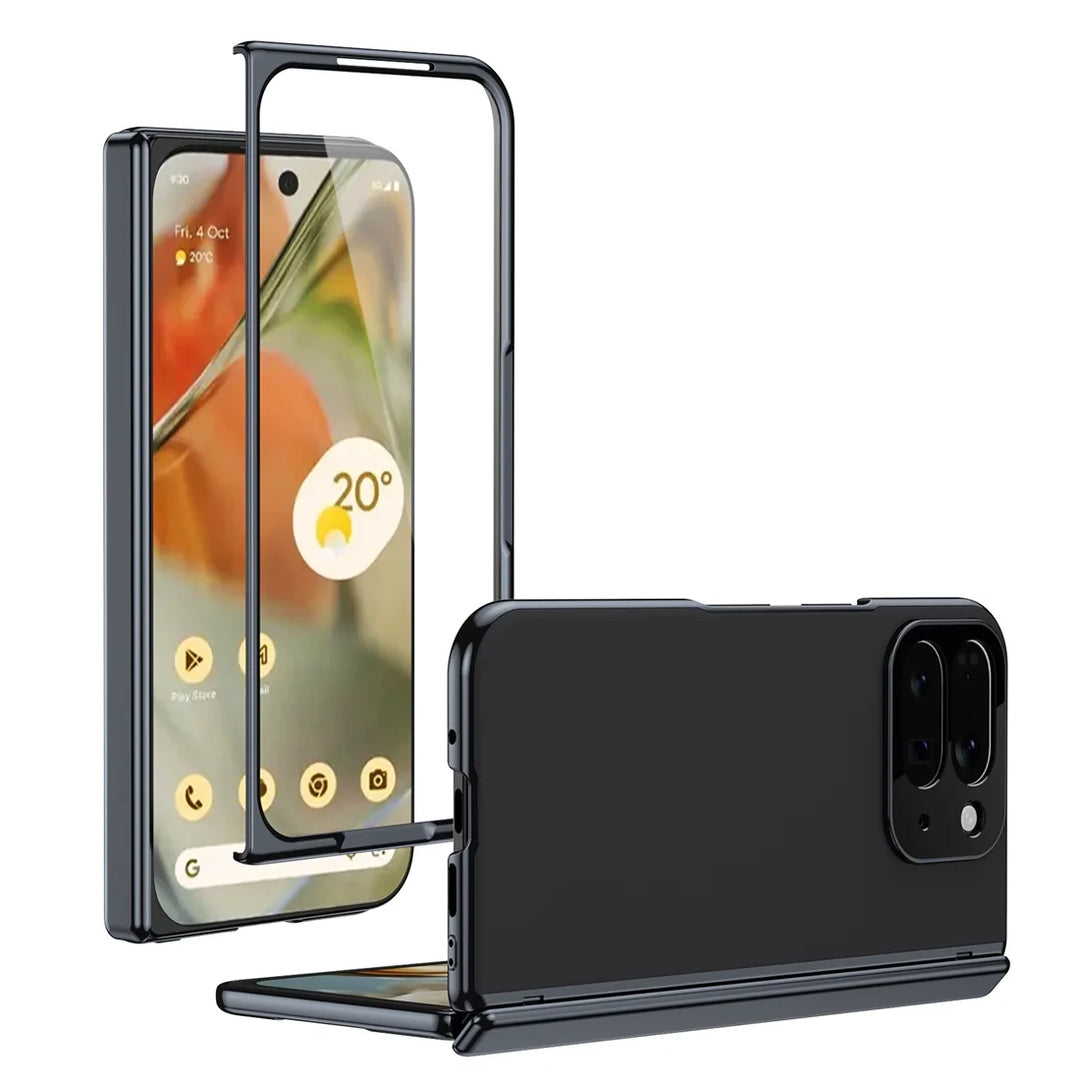
Generation-specific notes: Pixel 10 cases are not backward compatible with Pixel 9 — the camera bar shape, dimensions, and Pixelsnap magnet placement all changed between generations. Pixel 9 Pro cases do not fit Pixel 9 Pro XL (different display size = different dimensions). The Pixel 10 Pro Fold is the hardest model to find cases for — most brands skip foldables entirely due to the engineering complexity of the hinge mechanism. If you own a Pro Fold, your options are limited to specialist brands like The Pixel Case and OtterBox.
How to Maintain Your Pixel Case for Maximum Longevity
A well-maintained case lasts significantly longer than a neglected one. Here are the care basics for each material type.
TPU and silicone cases: Clean monthly with mild soap and warm water. Dry completely before re-installing. Avoid alcohol-based cleaners which can dry out TPU and cause brittleness over time. If the case starts to feel loose or the corners no longer spring back after compression, it is time to replace it, as the shock-absorbing capacity has degraded.
Polycarbonate and hybrid cases: Wipe with a damp microfiber cloth. These require the least maintenance. Inspect corners quarterly for hairline cracks that can develop from cumulative impact stress, as even small cracks compromise structural integrity during the next drop.
Leather cases: Genuine leather benefits from occasional conditioning with a leather balm or conditioner (every 2-3 months). Keep away from prolonged water exposure. Vegan leather is lower maintenance, simply wipe clean with a damp cloth. Both types should be removed from the phone monthly to clean any trapped dust between case and phone, which can cause micro-scratches on the glass back over time.
Clear cases: Clean more frequently (bi-weekly) to prevent yellowing acceleration from skin oils and UV exposure. Store in a dark place when not in use if you rotate cases. Accept that all-TPU clear cases are semi-disposable items with a 6-12 month appearance lifespan, while polycarbonate-back clear cases last significantly longer.
Aramid fiber cases: These are the lowest-maintenance option. The woven fiber resists staining, scratching, and UV degradation. Wipe clean with a dry cloth. Aramid cases can last the entire lifespan of your phone with minimal care.
General rule for all cases: Remove your case every few weeks and clean both the case interior and your phone back with a soft cloth. Trapped grit between case and phone acts like sandpaper over months, creating fine scratches on the glass back that you only notice when you finally remove the case.
Shop Pixel 8 and 8 Pro cases →
Frequently Asked Questions
Do I really need a case for my Google Pixel?
A Pixel 10 screen repair costs $229–$289. The phone starts at $699. A case costing $32–$50 reduces your risk of needing that repair significantly. If you hate bulk, ultra-slim aramid fiber cases add less than 1mm thickness. The math strongly favours protection — but ultimately it's your choice.
What is the best type of Google Pixel case for everyday use?
A slim TPU + polycarbonate hybrid with MagSafe magnetic ring. This combination provides drop protection for pocket-height falls (6–10ft rated), MagSafe/Pixelsnap charging compatibility, raised camera bezels, and a pocket-friendly profile. It's the best balance of protection and usability for most users.
What does MagSafe compatible mean for Pixel cases?
It means the case contains a magnetic ring aligned with the Qi2 standard that allows your Pixel to snap onto MagSafe chargers, wallets, car mounts, and stands. Pixel phones don't have built-in MagSafe — the case provides the magnetic array. MagSafe compatible cases work with both Apple MagSafe and Google Pixelsnap accessories.
What is Pixelsnap and which cases support it?
Pixelsnap is Google's branded implementation of Qi2 magnetic wireless charging on Pixel 9 and 10 series. Any case with a properly aligned Qi2/MagSafe magnetic ring supports Pixelsnap — enabling 15W snap-on charging with Pixelsnap-certified chargers. Look for "MagSafe compatible," "Qi2," or "Pixelsnap" in the case listing.
How do I know if a case fits my specific Pixel model?
Pixel cases are model-specific. A Pixel 10 case won't fit a Pixel 10 Pro or Pixel 10 Pro XL. Always check that the listing specifies your exact model. Look for product photos showing the camera bar cutout — if the listing shows a generic rectangle rather than a Pixel-specific shape, the fitment may be imprecise.
What is military-grade drop protection and does it matter?
MIL-STD-810H is a US military testing standard meaning the case survived 26 drops from 4–6 feet. The label is freely applied and not independently verified. Foot ratings (10ft, 15ft, 20ft) are more meaningful — most phone drops are 2–4 feet, so a 10ft rating provides adequate margin for 95% of users.
What is the difference between TPU and polycarbonate cases?
TPU is flexible and grippy — it absorbs shock on bumper edges. Polycarbonate is rigid and scratch-resistant — it distributes force across the back plate. The best everyday cases use both: TPU bumper for impact absorption, polycarbonate back for structure. Pure TPU cases are grippier but less structurally rigid. Pure PC cases are slimmer but less shock-absorbent.
How often should I replace my Pixel case?
Replace when you see signs of wear that affect protection: compressed corners that no longer spring back, loose fit from stretched TPU, yellowing on clear cases, or cracked polycarbonate. For quality hybrid cases, expect 12–18 months of use. Ultra-premium cases (aramid fiber, leather) can last 2–3+ years with care.
Now you know exactly what you need. Find it.
70+ cases per Pixel model · Free worldwide shipping · Pixel 6 through Pixel 10 Pro Fold